
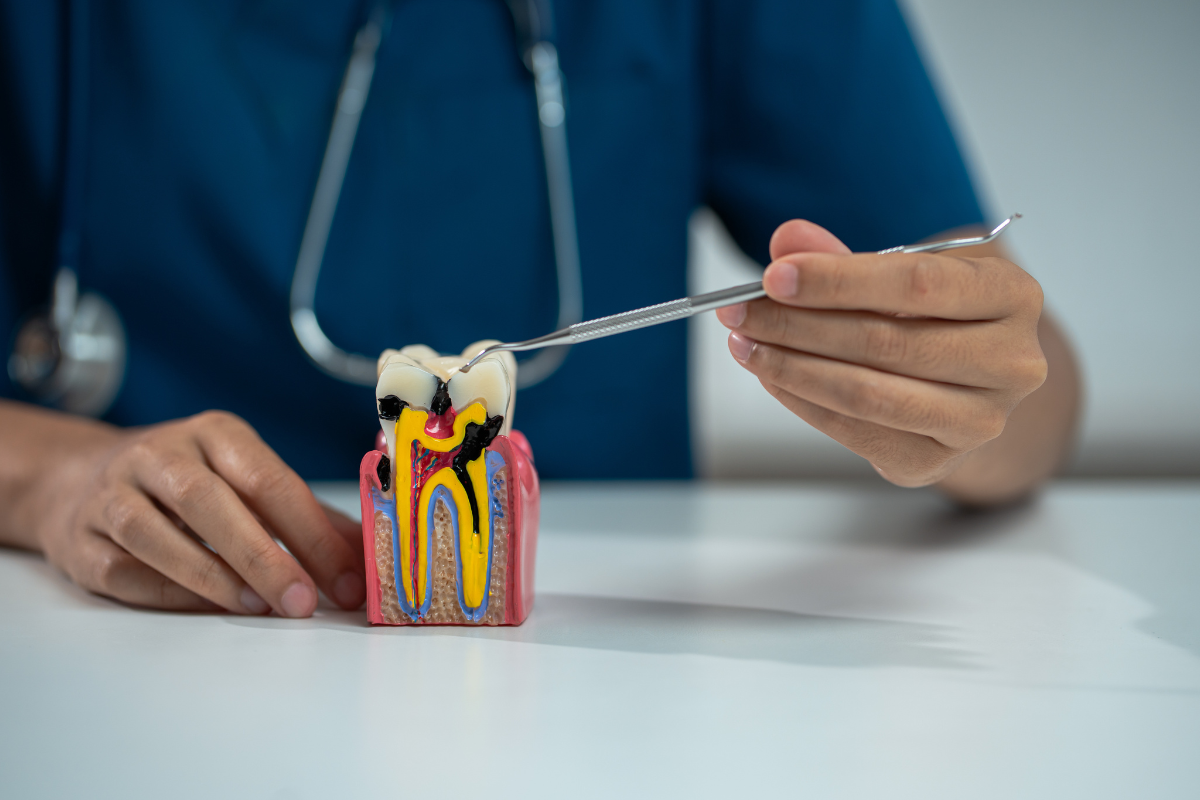
A tooth infection is not something you should ignore simply because the pain is mild or has temporarily gone away. When bacteria reach the inner pulp of a tooth, the infection can move beyond the tooth and affect the surrounding tissues, jawbone, and other areas of the body in more serious cases.
So, can a tooth infection spread if you don’t get a root canal? Yes, an untreated infection can spread, although the progression is not the same for everyone. The longer an infected tooth goes without appropriate treatment, the greater the risk of complications such as an abscess, bone damage, swelling, or tooth loss.
For patients looking for root canal therapy in Pflugerville, understanding what happens when an infection is left untreated can make it easier to recognize when professional dental care is needed.
How Does a Tooth Infection Start?
A tooth infection often begins when bacteria get through the protective outer layers of a tooth and reach the dental pulp.
The pulp is the soft tissue inside the tooth that contains nerves and blood vessels. Deep tooth decay, cracks, fractures, or dental trauma can create an opening that allows bacteria to reach this area.
Common causes include:
- A deep cavity that reaches the pulp
- A cracked or fractured tooth
- An untreated dental injury
- A damaged or failing filling
- Repeated dental procedures on the same tooth
- Severe wear or damage that exposes the inner tooth
Once bacteria enter the pulp, the tissue can become inflamed and eventually infected. At this point, the problem usually requires professional treatment rather than simply waiting for symptoms to disappear.
Signature Smiles Dentistry & Orthodontics explains that root canal therapy is used when infection or damage affects the pulp and that treatment involves removing infected tissue, cleaning the canals, and sealing the tooth.
Can a Tooth Infection Spread If You Don’t Get a Root Canal?
Yes. If a tooth has an infection that requires root canal treatment and the source is not treated, the infection can extend beyond the inside of the tooth.
The infection may affect:
- The tissues around the tooth
- The gums
- The jawbone
- Nearby facial tissues
- Other areas of the head and neck
- The bloodstream in severe cases
However, this does not mean every untreated tooth infection will immediately become a serious medical emergency. Dental infections can progress differently depending on the source of the infection, the person’s overall health, and whether the infection is able to drain.
The important point is that there is no reliable way to predict that an untreated infection will simply stay contained.
The American Dental Association recommends definitive dental treatment for many pulpal and periapical infections rather than relying on antibiotics alone. Depending on the diagnosis, treatment may include root canal treatment, drainage, or another appropriate dental procedure.
Where Can a Tooth Infection Spread?
An untreated dental infection can move from the infected tooth into surrounding tissues.
1. The Gum Tissue
You may notice swelling, tenderness, redness, or a small pimple-like bump on the gum near the affected tooth.
A bump on the gum can sometimes indicate that an abscess has formed and that the infection has created a pathway for drainage.
Importantly, if an abscess drains and the pain improves, that does not necessarily mean the infection has disappeared. The original source may still be present inside the tooth.
2. The Jawbone
An infection originating inside a tooth can extend through the tissues around the root and affect the surrounding bone.
This is one reason dentists recommend evaluation when symptoms suggest an infected tooth rather than waiting for severe pain to develop.
3. Facial and Neck Tissues
In more advanced situations, dental infections can spread into surrounding soft tissues and cause noticeable facial or neck swelling.
This can become particularly concerning when swelling progresses quickly or begins interfering with normal functions such as swallowing or breathing.
4. The Bloodstream and Other Areas
Severe dental infections can, in rare circumstances, become systemic.
The risk of serious complications is one reason a spreading dental infection should not be managed solely by waiting at home. A recent clinical review of dental infections similarly emphasizes that untreated infections can extend into nearby tissues and, in serious cases, become systemic.
What Happens If You Ignore an Infected Tooth?
One of the biggest misconceptions about tooth infections is that they will always become extremely painful before they become serious.
That is not necessarily true.
An infected tooth can sometimes change over time. For example, an infection may initially cause significant sensitivity or tooth pain. If the pulp inside the tooth becomes severely damaged or dies, the sensation may change or even decrease.
That improvement can be misleading.
The absence of severe pain does not automatically mean the infection has healed. A dental examination and, when appropriate, dental X-rays are needed to determine what is happening beneath the surface.
Leaving the problem untreated can potentially lead to:
- A dental abscess
- Increasing swelling
- Damage around the tooth root
- Bone loss around the affected area
- A weakened or fractured tooth
- Tooth loss
- More extensive infection
- More complex treatment
Signature Smiles already emphasizes that delaying treatment for an infected or damaged tooth can allow the problem to worsen and potentially result in tooth loss.
Can a Tooth Infection Go Away on Its Own?
A tooth infection that has reached the pulp generally should not be assumed to heal on its own.
Pain can fluctuate, and symptoms can temporarily improve. An abscess can also drain, which may reduce pressure and discomfort.
But these changes do not necessarily eliminate the underlying source of infection.
When the pulp inside a tooth is infected or no longer healthy, treatment is often needed to address the source. Depending on the condition of the tooth, that may involve root canal treatment or, when the tooth cannot be predictably restored, extraction.
This is why “the pain went away” should not automatically be interpreted as “the infection is gone.”
Can Antibiotics Cure a Tooth Infection Without a Root Canal?
This is one of the most common questions patients have.
Antibiotics are not a substitute for definitive dental treatment when an infected tooth needs treatment.
The American Dental Association recommends against antibiotics for many dental pain and localized infection situations when appropriate dental treatment is available. Instead, dentists should prioritize treatments that address the source, such as root canal treatment or drainage when clinically appropriate. Antibiotics may be indicated when there are signs of systemic involvement or in other specific circumstances determined by a dentist.
This distinction is important.
An antibiotic may be part of treatment in certain cases, but simply taking an antibiotic does not mean the infected pulp inside a tooth has been permanently removed.
Your dentist needs to determine the cause and severity of the infection before deciding what treatment is appropriate.
When Is Root Canal Therapy Recommended?
Root canal therapy is generally considered when the dental pulp has become infected or irreversibly damaged, and the tooth can still be restored.
The goal is to remove the infected or damaged tissue from inside the tooth, clean and disinfect the root canals, and seal the space.
This allows the dentist to address the source of infection while preserving the natural tooth whenever possible.
At Signature Smiles Dentistry & Orthodontics, our root canal treatment approach includes evaluating the tooth and using X-rays when appropriate to understand the condition of the tooth and plan treatment.
Signs You Shouldn’t Ignore
Not every toothache means you need a root canal. However, certain symptoms deserve prompt dental attention.
Watch for:
- Persistent or worsening tooth pain
- Pain when biting or chewing
- Sensitivity to hot or cold that lingers
- Swollen or tender gums
- A pimple or bump on the gum
- Pus or drainage around the tooth
- Facial swelling
- A tooth that becomes darker or gray
- A cracked or broken tooth
- A bad taste in your mouth near a specific tooth
- Fever or feeling generally unwell
Some of these symptoms can have causes other than a root canal infection, so professional evaluation is important rather than trying to diagnose the problem yourself.
What If You Don’t Get Treatment Right Away?
Sometimes patients delay treatment because they are worried about the procedure, their symptoms seem manageable, or they hope the problem will resolve.
If you cannot get immediate dental care, contact a dental office as soon as possible and explain your symptoms. Your dentist can advise you about the appropriate next step based on your situation.
Avoid putting aspirin directly on the tooth or gum, and don’t take leftover antibiotics without professional guidance.
Most importantly, don’t use temporary pain relief as a reason to postpone evaluation indefinitely.
The sooner the source of a dental infection is identified, the more clearly your dentist can explain your treatment options.
When Is a Tooth Infection a Dental Emergency?
Some symptoms require urgent attention.
Seek emergency medical care immediately if you have significant facial or neck swelling accompanied by difficulty breathing or swallowing, severe systemic symptoms, confusion, or rapidly worsening symptoms.
The ADA’s guidance notes that worsening infection and concern for deeper-space infection or an immediate threat to life warrant urgent evaluation.
For less severe symptoms such as tooth pain, swelling, sensitivity, or a suspected abscess, contact your dentist promptly rather than waiting for the problem to become an emergency.
Root Canal or Tooth Extraction: What Are the Options?
Root canal treatment is not automatically the right choice for every infected tooth.
The appropriate treatment depends on factors such as:
- How extensively the tooth is damaged
- Whether the tooth can be restored
- The location of the infection
- The condition of the surrounding structures
- The health of the tooth’s root
- Your overall oral health
When a tooth can be successfully restored, root canal therapy can provide a way to preserve the natural tooth.
If a tooth is too damaged to restore, extraction may be considered instead. Signature Smiles also notes that certain severe cracks may require extraction, while other damaged teeth may be treated with a crown or a root canal-and-crown combination.
The goal isn’t simply to choose a procedure. It’s to determine which treatment gives the tooth and surrounding tissues the best chance of remaining healthy.
How Can You Reduce Your Risk of a Tooth Infection?
The best way to deal with a dental infection is to reduce the chances of developing one in the first place.
Good preventive habits include:
- Brush your teeth twice a day with fluoride toothpaste.
- Clean between your teeth every day.
- Keep routine dental appointments.
- Treat cavities before they become deep.
- Have cracks or broken teeth evaluated promptly.
- Don’t ignore persistent tooth sensitivity or pain.
- Follow through with recommended dental treatment.
Routine dental visits can help identify cavities, cracks, gum problems, and other issues before they progress to more complicated conditions.
Root Canal Therapy in Pflugerville
If you have persistent tooth pain, swelling, sensitivity, or another symptom that makes you concerned about an infected tooth, getting an evaluation is an important first step.
At Signature Smiles Dentistry & Orthodontics, we provide root canal therapy as part of our dental services in Pflugerville. Our team can evaluate your symptoms, examine the affected tooth, and discuss appropriate treatment options based on your individual needs.
Our goal is to help patients understand what is happening with their teeth and make informed decisions about treatment rather than waiting for a manageable dental problem to become more complicated.
Frequently Asked Questions
Can a tooth infection spread to the jaw?
Yes. An infection originating inside a tooth can extend beyond the tooth and affect surrounding tissues, including the area around the root and jawbone. Prompt dental evaluation can help determine whether an infection is present and how extensive it is.
Can a tooth infection spread without causing pain?
Yes. Pain is not a reliable measure of whether an infection is present or how serious it may be. Symptoms can change over time, particularly if the pulp becomes severely damaged or an abscess begins draining. A dental examination is the best way to determine what is happening.
How long can you leave an infected tooth untreated?
There is no safe universal timeframe. Dental infections can progress differently from one person to another, and waiting can increase the risk of complications. If you suspect an infected tooth, contact a dentist as soon as possible.
Will antibiotics get rid of a tooth infection?
Antibiotics may be appropriate in certain situations, particularly when infection has systemic involvement, but they are not a replacement for definitive dental treatment when the infected tooth itself needs treatment. The ADA recommends prioritizing appropriate dental treatment for many pulpal and periapical conditions.
Is root canal therapy better than extraction?
It depends on the condition of the tooth. If the tooth can be predictably restored, root canal therapy may allow you to keep your natural tooth. If the tooth cannot be restored, extraction may be necessary. Your dentist can evaluate the tooth and explain the available options.
Don’t Wait for a Tooth Infection to Get Worse
An infected tooth may not always cause dramatic symptoms right away, but that doesn’t mean it is safe to ignore. When bacteria reach the pulp and an infection develops, appropriate dental treatment can help address the source before the problem progresses.
If you’re experiencing persistent tooth pain, swelling, sensitivity, a damaged tooth, or other signs of infection, our team at Signature Smiles Dentistry & Orthodontics can evaluate your concerns and discuss your treatment options.
If you’re looking for root canal therapy in Pflugerville, TX, contact Signature Smiles Dentistry & Orthodontics to schedule an appointment and take the next step toward protecting your natural smile.